

The Problem Skills Solve
Your agent has access to tools: it can look up orders, send emails, process refunds. But knowing how to use each tool individually isn’t the same as knowing when and how to orchestrate them together. Consider a return request. The agent needs to: verify the order exists, check eligibility against your policy, generate a return label, process the refund, and send confirmation. Without guidance, it might skip steps, do them out of order, or miss edge cases. Skills solve this by encoding your workflows. When a customer asks about returns, the agent loads the relevant skill and follows the documented procedure. It knows which tools to call, in what sequence, with what conditions.Why SKILL.md Format
Char uses the AgentSkills specification, an open format originally developed by Anthropic and now adopted across the AI ecosystem. This matters for several reasons. First, portability. A skill you write for Char works in Claude Code, Cursor, and other compatible tools. You’re not locked into a proprietary format. Second, simplicity. Skills are Markdown files with YAML frontmatter—the same format developers already use for documentation, blog posts, and configuration. There’s no special syntax to learn, no compilation step, no deployment process. Third, version control. Skills are text files. You can store them in git, review changes in pull requests, and track who modified what and when. This is particularly valuable for regulated industries where audit trails matter.Progressive Disclosure
The Agent’s Skill Tools
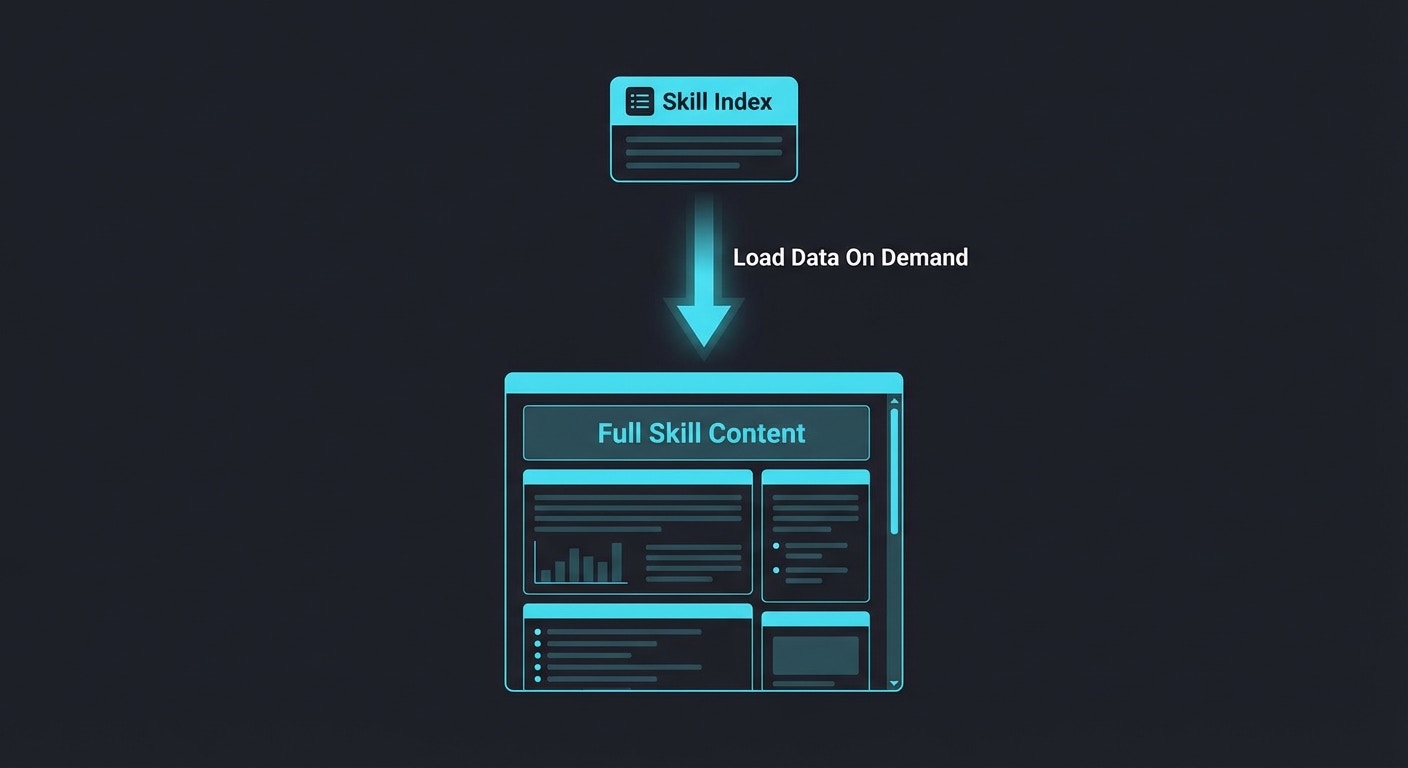
The agent doesn’t just consume skills passively—it has built-in tools to manage them:read_skillloads full instructions when a task matches a skill’s descriptioncreate_skillcreates new skills from SKILL.md contentupdate_skill_with_patchmakes targeted edits without rewriting the entire skill
Skills vs. System Prompts
You might wonder why skills exist when you could just put everything in the system prompt. The distinction becomes clear at scale. A system prompt is a single block of instructions that loads for every conversation. It’s appropriate for universal guidance: your brand voice, safety rules, things the agent should always know. Skills are modular. They load selectively based on context. As your knowledge base grows—ten skills, fifty skills, hundreds of skills—this modularity becomes essential. You couldn’t fit everything in a system prompt even if you wanted to. There’s also a maintenance story. Updating a single skill doesn’t require touching your core configuration. Teams can own their own skills. Changes are isolated and reviewable.The Broader Context
Skills reflect a shift in how we think about AI customization. Traditional approaches required training data, compute resources, and machine learning expertise. You’d collect examples, fine-tune a model, deploy it, and hope it generalized well. Instruction-based customization is different. You tell the agent what to do in natural language. The feedback loop is immediate—change the instructions, see the behavior change. Domain experts who understand the business can contribute directly, without going through a technical translation layer. This doesn’t replace fine-tuning entirely. If you need the model to recognize patterns it wasn’t trained on or generate outputs in a specific style, training still has a role. But for teaching procedures, policies, and domain knowledge, instructions are often simpler and more transparent.Authorship and Collaboration
Skills can come from multiple sources: dashboard users writing them manually, end users creating them through conversation, or the agent drafting them based on workflows you describe. This distributed model means your knowledge base grows organically. A support agent notices they keep explaining the same procedure and asks the agent to capture it. A power user documents a workflow for their colleagues. The barrier to contribution is low because you’re just describing what should happen. All skills remain under organizational control. You can review, edit, and archive skills from the dashboard regardless of who created them or how they were created.Further Reading
Organizational Learning
How skills become institutional memory
Creating Skills
Step-by-step guide
Skill Schema
Format specification
AgentSkills.io
Open standard